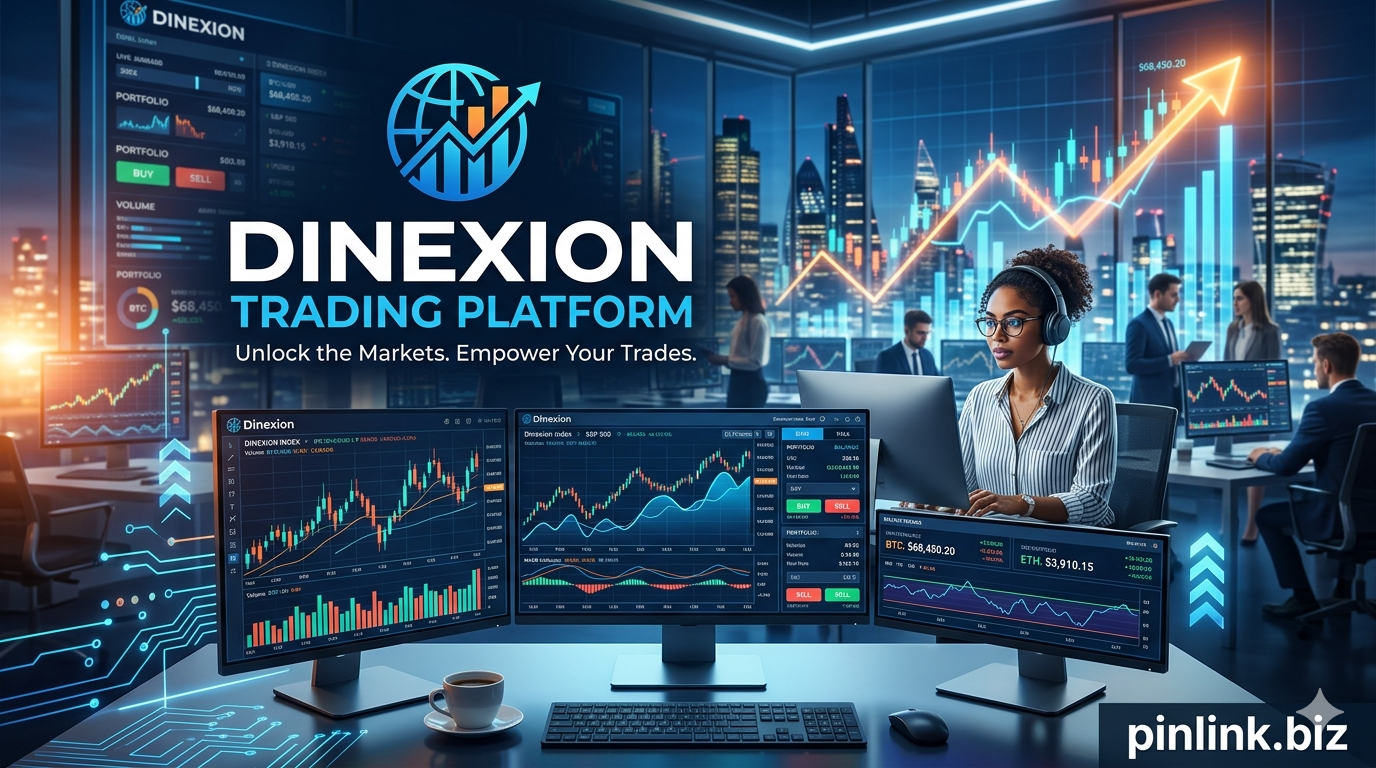
The cryptocurrency market in 2026 is faster, more complex, and more reliant on artificial intelligence than ever before. In this fast-paced financial ecosystem, a flood of automated trading platforms has emerged, promising to help retail investors generate passive income without needing a degree in finance. Among the most talked-about names currently circulating online is Dinexion. But with grand promises of “quantum-inspired technology” and guaranteed high win rates, many prospective investors are left asking: is Dinexion a breakthrough in automated crypto trading, or is it just another sophisticated trap?
What Is Dinexion?
Dinexion positions itself as a state-of-the-art, AI-powered cryptocurrency and asset trading platform. According to its official marketing materials, Dinexion was built to provide an accessible “gateway to smart crypto investing.” The core premise of the platform is that it utilizes an advanced artificial intelligence system combined with “quantum-inspired technology” to continuously analyze live blockchain data, market sentiment, and key global economic signals 24 hours a day, 7 days a week.
The Core Concept: Automated Investing
For the uninitiated, cryptocurrency markets never sleep. Unlike traditional stock markets that have set trading hours, the blockchain operates continuously. This round-the-clock nature can be exhausting for human traders. Dinexion claims to solve this problem by fully automating the investment process. The platform asserts that its algorithms can monitor price action and execute trades on a user’s behalf, adjusting portfolios dynamically to capture profits while minimizing risks without requiring manual intervention.
Beyond Crypto: A Multi-Asset Hub
While predominantly advertised as a crypto trading bot, Dinexion is heavily marketed as a multi-asset ecosystem. The platform reportedly equips investors with the ability to trade across diverse asset classes. This includes not just popular cryptocurrencies like Bitcoin (BTC) and Ethereum (ETH), but also traditional financial instruments such as global indices, blue-chip stocks, and commodities. By offering a unified dashboard for all these assets, Dinexion appeals to users looking to build a highly diversified portfolio without managing multiple brokerage accounts.
The Target Audience
Dinexion specifically targets two distinct groups of people. The first group consists of absolute beginners who lack the technical knowledge to read candlestick charts or calculate moving averages. For them, Dinexion offers a “hands-off” approach where the AI supposedly does all the heavy lifting. The second group comprises experienced traders looking to streamline their strategies through automation or by leveraging the platform’s marketplace of pre-built trading bots.
However, as we peel back the layers of this platform, it is crucial to separate the marketing rhetoric from operational reality. Claims of “emotion-free” trading and guaranteed profit generation are common in the auto-trading industry, and they often mask the inherent volatility and risk of the financial markets.
Key Features and Trading Tools
To compete in the crowded arena of trading platforms in 2026, Dinexion boasts a variety of high-tech features designed to attract and retain users. Here is a detailed breakdown of the primary tools and features highlighted by the platform.
1. AI-Driven Smart Algorithms
At the heart of Dinexion is its proprietary AI software. The platform claims that its engine uses natural language processing (NLP) to read market sentiment from news articles and social media, alongside machine learning algorithms that recognize complex technical chart patterns. This dual approach is designed to predict short-term price movements and execute trades fractions of a second faster than humanly possible. By acting ahead of market trends, the AI aims to secure favorable entry and exit points.
2. The Dinexion Marketplace and Copy-Investing
One of the more unique selling propositions of Dinexion is its bot marketplace. Rather than forcing users to rely entirely on a single proprietary algorithm, the platform allegedly allows users to browse and rent trading bots created by other professional traders. This “copy-investing” feature enables beginners to mimic the strategies of seasoned veterans. Users can reportedly view the historical performance, risk profile, and win rate of these bots before deciding to allocate funds to them.
3. Demo Account and Paper Trading
For risk-averse users, Dinexion claims to offer a fully functional demo account. Upon registration, users are supposedly credited with virtual funds, allowing them to test the AI’s capabilities or trial different bots from the marketplace in a simulated environment. This feature is crucial for any legitimate platform, as it gives users the opportunity to familiarise themselves with the interface and the mechanics of auto-trading before risking actual capital.
4. Cloud-Based Web Platform
Unlike older trading terminals that required heavy desktop installations (such as MetaTrader 4), Dinexion operates entirely in the cloud. It is a web-based platform, meaning it can be accessed from any modern web browser on a desktop, tablet, or smartphone. This cloud infrastructure ensures that the trading bots remain active and connected to the market even if the user turns off their personal device or loses internet connection.
5. Automated Portfolio Balancing
Asset allocation is a critical component of risk management. Dinexion claims its system doesn’t just execute random trades but actively manages a balanced portfolio. For instance, if altcoins become overwhelmingly volatile, the AI might automatically rebalance the user’s holdings toward more stable assets like Bitcoin or even fiat-pegged stablecoins, protecting the overall account equity from sudden market crashes.
How It Works and Getting Started
Dinexion’s user journey is explicitly designed to be frictionless, aimed at converting curious website visitors into active investors in the shortest time possible. If you decide to proceed (despite the risks we will discuss later), the process is generally structured as follows:
Step 1: Account Registration
Getting started begins on the official Dinexion website. The registration form is simple, requiring basic personal information: first name, last name, email address, and a phone number. Interestingly, unlike heavily regulated platforms that require extensive Know Your Customer (KYC) documentation (such as government IDs and utility bills) upfront, Dinexion often permits initial registration with minimal friction.
Step 2: Broker Assignment and Verification
Dinexion itself is not a brokerage; it is an algorithmic interface that routes trades through third-party brokers. Once registered, users are typically redirected to a partnered broker’s platform. It is at this stage that users may be asked to complete a KYC verification process, depending on the jurisdiction of the underlying broker. A representative from the platform or the broker often calls the user at this stage to “assist” with the setup—a common tactic in the industry to encourage immediate deposits.
Step 3: Depositing Capital
To activate the live trading features, users must fund their accounts. The industry standard minimum deposit for platforms of this nature is usually $250. Dinexion claims to support multiple payment methods, ensuring a seamless transfer of funds.
Step 4: Configuring the Bot
Before turning the AI loose on the markets, users must define their risk parameters. This involves setting stop-loss limits, take-profit targets, and deciding how much capital the bot can risk per trade. Users can also select which specific assets the bot is allowed to trade.
Step 5: Live Trading
Once the parameters are set and the user activates the system, the AI takes over. It begins scanning the markets and executing trades autonomously. Users are encouraged to monitor their dashboards for a few minutes daily to check performance and adjust risk settings if necessary.
Security and Safety Measures
When dealing with financial platforms, security is non-negotiable. Dinexion makes several claims regarding the safety of its users’ funds and data, but these must be scrutinized critically against objective reality.
Platform Encryption
On a technical level, the Dinexion website uses standard SSL (Secure Socket Layer) encryption. This ensures that any data transmitted between the user’s browser and the platform’s servers—such as passwords, email addresses, and payment details—is scrambled and protected from potential interception by cybercriminals.
Third-Party Broker Integration
Dinexion claims that it does not hold user funds directly. Instead, funds are supposedly deposited with affiliated brokers who are responsible for the actual execution of trades and the custody of capital. The platform argues that this separation of technology and custody adds a layer of security. However, this is only true if the partnered brokers are themselves regulated by tier-one financial authorities like the SEC (USA), FCA (UK), or ASIC (Australia). Unfortunately, many automated platforms partner with offshore, unregulated brokers, which severely limits the user’s legal recourse if something goes wrong.
The Regulatory Red Flags
E-E-A-T guidelines require us to look beyond marketing claims and examine official regulatory consensus. This is where Dinexion’s safety profile deteriorates significantly.
In April 2026, the Australian Securities and Investments Commission (ASIC) updated its Investor Alert List via MoneySmart.gov.au. Specifically, on April 17, 2026, Dinexion was officially listed as an “Unlicensed Entity.” According to ASIC, this means Dinexion is offering financial products or services without holding a valid Australian Financial Services (AFS) licence.
Furthermore, the platform’s own website features bizarre disclaimers. Their legal footer notes that “The featured video is promotional, and all participants are professional actors.” It also includes a highly unusual disclaimer stating it is “not affiliated, associated, authorised, endorsed by, or in any way officially connected with Belle Gibson” (a notorious Australian scammer). These elements strongly suggest that the platform relies on deceptive marketing tactics and is highly aware of the legal liabilities it faces, using boilerplate legal jargon to shield itself from accountability.
Supported Assets and Markets
A key aspect of any trading platform’s utility is the breadth of markets it allows users to access. Dinexion markets itself as a comprehensive multi-asset ecosystem.
Cryptocurrencies
Crypto is the primary draw. The platform claims to support a wide array of digital assets. This includes large-cap stalwarts like Bitcoin (BTC) and Ethereum (ETH), which offer higher liquidity and slightly less volatility. Additionally, it claims to trade popular altcoins (like Ripple, Solana, Cardano) and potentially even highly volatile meme coins, depending on the integrated broker’s offerings.
Traditional Markets
To provide diversification, Dinexion reportedly extends its AI capabilities to traditional markets via Contracts for Difference (CFDs).
-
Stocks: Users can allegedly trade price movements on major global equities (e.g., Apple, Tesla, Amazon).
-
Indices: Access to broader market performance indicators like the S&P 500 or the NASDAQ.
-
Commodities: Trading options for hard assets like gold, silver, and crude oil, which often serve as hedges against inflation or crypto market downturns.
Important Note: By utilizing CFDs, users never actually own the underlying asset (e.g., you don’t own actual gold or actual Bitcoin). You are merely speculating on the price movement. This is a high-risk form of trading, which is heavily restricted or outright banned in certain jurisdictions (like the USA).
Fees, Availability, and User Experience
Understanding the cost of doing business is vital for any trader, as high fees can quickly erode profits.
Transparent Yet Ambiguous Fees
Dinexion heavily markets itself as a “Free to start” platform. They explicitly state: “Dinexion doesn’t charge subscription or licensing fees… there are no hidden maintenance, withdrawal, or deposit charges.”
However, they carefully add the caveat: “only standard broker spreads or network fees may apply.” This is the catch. Because Dinexion routes you to a third-party broker, that broker makes money off the “spread” (the difference between the buy and sell price). In many automated trading setups, these partner brokers charge wider spreads than regulated exchanges to kick back a commission to the bot creator.
Global Availability
Dinexion claims global availability across Europe, Asia, Africa, and Oceania, boasting multilingual support. However, it explicitly states that it does not operate in the United States. This is a common hallmark of CFD-based and unregulated crypto bots, as the US regulatory environment (via the SEC and CFTC) strictly prohibits the offering of such leveraged derivatives to retail investors without stringent licensing.
User Experience (UX)
From a purely design standpoint, platforms like Dinexion usually offer a highly polished user experience. The interface is purposefully simplified to ensure that novices do not feel overwhelmed. Large, clear buttons, intuitive dashboard layouts displaying profit/loss ratios, and straightforward settings panels make the software incredibly easy to navigate.
Deposit and Withdrawal Methods
To facilitate global access, the platform accepts numerous payment methods:
-
Major Credit and Debit Cards (Visa, Mastercard)
-
Instant Bank Transfers
-
E-wallets (PayPal, Skrill, Neteller)
-
Direct crypto deposits via Stablecoins (USDT, USDC)
While deposits are usually instant, users of platforms in this category frequently report significant delays or aggressive pushback from “account managers” when attempting to process withdrawals.
Pros and Cons
To provide a balanced perspective, here is an objective look at the theoretical advantages and the very real disadvantages of the Dinexion platform.
Pros
-
Automated Trading Environment: Reduces the emotional stress of trading and allows for 24/7 market participation.
-
User-Friendly Interface: The web-based dashboard is accessible and highly intuitive for beginners.
-
Multi-Asset Support: Offers diversification by allowing trading across crypto, stocks, indices, and commodities.
-
Demo Account Feature: Allegedly provides a risk-free way to test strategies before committing real funds.
-
Multiple Funding Options: Makes depositing capital easy across various global payment networks.
Cons
-
Unlicensed and Unregulated: Officially flagged by ASIC (April 2026) as an unlicensed entity, meaning no legal protections for investors.
-
Deceptive Marketing: Admits in fine print that promotional videos use paid actors and do not represent real user experiences.
-
Opaque Broker Partnerships: Users cannot choose their broker and are routed to offshore entities with unknown regulatory standing.
-
CFD Risks: Trading derivatives carries a massive risk of total capital loss, especially with leverage.
-
Aggressive Sales Tactics: High likelihood of receiving persistent phone calls from salespeople pushing for larger deposits.
Is Dinexion Legit or Scam?
This is the most critical question for any reader. Based on a comprehensive review of the platform’s mechanics, marketing materials, and regulatory standing in 2026, we urge extreme caution regarding Dinexion, as it exhibits multiple hallmarks of a potential investment scam.
While the website works, the software interface looks polished, and you may even see simulated profits on your dashboard initially, the foundational E-E-A-T principles demand that we look at the regulatory reality.
The ASIC Warning: The most damning evidence against Dinexion is its presence on the Australian Securities and Investments Commission’s Investor Alert List as of April 17, 2026. A government financial watchdog specifically warning the public that Dinexion is an unlicensed entity means that dealing with them strips you of all standard financial protections. If the platform collapses or the partnered broker refuses your withdrawal, you have no ombudsman to complain to and no compensation scheme to bail you out.
The “Actor” Disclaimer: Legitimate trading platforms rely on transparent audits and real client testimonials. Dinexion’s own footer explicitly admits that their promotional materials feature paid actors. Furthermore, the bizarre disclaimer distancing themselves from a known fraudster (Belle Gibson) suggests they are using hastily assembled legal templates common in “clone” scam websites.
The Business Model: Platforms like Dinexion operate as marketing funnels. The “free AI software” is often a lure to get your personal information and a $250 deposit. They make their money through affiliate commissions paid by offshore brokers. These brokers often act as market makers, meaning they trade against you. When you lose money, they profit. Therefore, an AI bot provided by this ecosystem is mathematically disincentivized from making you consistently profitable over the long term.
While we cannot definitively say that every user will lose money, the combination of regulatory warnings, deceptive marketing, and conflict-of-interest broker models means Dinexion cannot be considered a legitimate or safe investment platform.
Final Verdict and CTA
In the rapidly evolving world of 2026 cryptocurrency trading, artificial intelligence is indeed becoming a powerful tool. However, Dinexion does not appear to be the breakthrough it claims to be. Behind the sleek web design and promises of automated wealth lies an unlicensed entity that has drawn the direct ire of global financial regulators. The risk of capital loss—due both to the highly volatile nature of CFD trading and the unregulated status of the platform—is exceptionally high.
Trading should never be treated as a guaranteed path to passive income, and any platform promising otherwise should be viewed with deep skepticism.
Call to Action: Protect your hard-earned capital. If you want to invest in cryptocurrencies or traditional assets using advanced trading tools, avoid unlicensed platforms like Dinexion. Instead, opt for heavily regulated, transparent, and globally recognized exchanges (like Coinbase, Kraken, or eToro). Do your own research, prioritize security, and never invest money you cannot afford to lose.
FAQ Section (Featured Snippet Optimized)
What is Dinexion?
Dinexion is marketed as an AI-powered automated trading platform that claims to execute trades on behalf of users in the cryptocurrency, stock, and commodity markets. It advertises 24/7 algorithmic trading aimed at generating passive profits without requiring user intervention or deep financial knowledge.
Is Dinexion a scam or legit?
Dinexion exhibits significant red flags that suggest it is highly risky and potentially a scam. Most notably, as of April 2026, Dinexion is officially listed on the Australian Securities and Investments Commission (ASIC) Investor Alert List as an Unlicensed Entity. Furthermore, the platform admits to using paid actors in its promotional materials, leading experts to advise avoiding it.
How much does it cost to use Dinexion?
Dinexion claims the software itself is free to use with no subscription or licensing fees. However, users are typically required to make a minimum initial deposit of $250 with a partnered third-party broker to begin trading. Users are also subject to the spreads and network fees charged by those underlying brokers.
Can I withdraw my money from Dinexion anytime?
While Dinexion claims that users have full control of their funds and can withdraw money within 24 hours, users of similar unregulated platforms frequently report experiencing severe delays, hidden withdrawal fees, or arbitrary account freezes when attempting to remove their capital.
Does Dinexion have a mobile app?
Dinexion does not require you to download a native application from the Apple App Store or Google Play Store. Instead, it operates entirely as a cloud-based web platform. This means it is accessible and fully functional via any modern web browser on smartphones, tablets, and desktop computers.
Do I need trading experience to use Dinexion?
According to the platform’s marketing, no prior trading experience is required. The software is specifically designed for beginners, featuring automated AI bots and a “copy-investing” feature. However, experts warn that using automated tools without understanding market risks often leads to significant financial losses, especially on unregulated platforms.